

📌 Farsoon adds ALM materials and new PEBA production
Farsoon Technologies has expanded its open materials ecosystem to include three industrial polymer powders from EOS subsidiary Advanced Laser Materials (ALM), while also introducing a new selective laser sintering (SLS) process for PEBA targeting robotics and footwear production. Both developments were disclosed ahead of TCT Asia 2026.
Farsoon Technologies 扩展了其开放材料生态系统,新增了来自 EOS 子公司 Advanced Laser Materials (ALM) 的三种工业聚合物粉末,同时推出了一种针对机器人和鞋类生产的新型 PEBA 选择性激光烧结 (SLS) 工艺。这两项进展均在 TCT Asia 2026 之前公布。
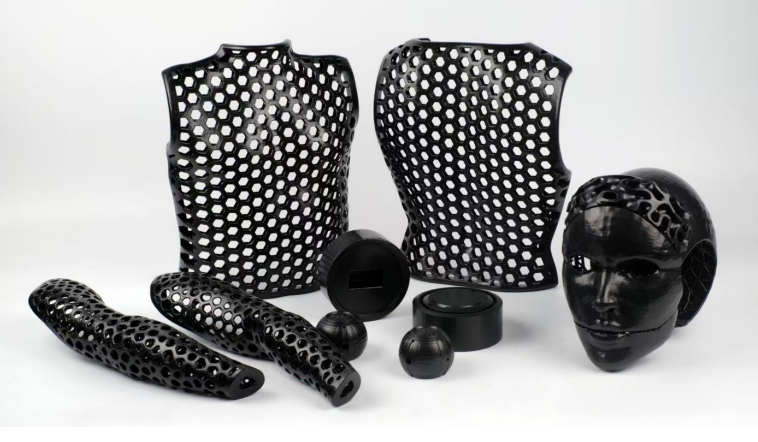
The ALM partnership adds three high-performance powders to Farsoon’s qualified lineup. HT-23 is a PEKK-based blend reinforced with carbon fiber, positioned as a direct replacement for Ultem in high-temperature applications. PA 850 Black is a bio-based polyamide with a melting temperature of approximately 185°C. Additionally, FR-106 is a flame-retardant material with tensile strength of up to 44 MPa that passes the FAR 25.853 60-second vertical burn test, qualifying it for aerospace and rail interior applications where regulatory compliance governs material selection.
与 ALM 的合作在 Farsoon 的合格产品线中增加了三种高性能粉末。HT-23 是一种碳纤维增强的 PEKK 基共混物,被定位为高温应用中 Ultem 的直接替代品。PA 850 Black 是一种生物基聚酰胺,熔融温度约为 185°C。此外,FR-106 是一种阻燃材料,拉伸强度高达 44 MPa,通过了 FAR 25.853 60 秒垂直燃烧测试,适用于材料选择受法规约束的航空航天和铁路内饰应用。
All three materials run on Farsoon’s 1001P, 601P, 403P, and 252P polymer systems, which span different build volumes and temperature capabilities. This expansion significantly broadens the range of applications possible with Farsoon hardware, from high-temperature engineering parts to flame-retardant interior components.
这三种材料均可在 Farsoon 的 1001P、601P、403P 和 252P 聚合物系统上运行,这些系统涵盖不同的构建体积和温度能力。此次扩展显著拓宽了 Farsoon 硬件可能应用的范围,从高温工程部件到阻燃内饰组件。
Where the ALM partnership adds qualified powders to an existing SLS workflow, the PEBA process introduces an entirely different production method: parts are first 3D printed via SLS, then subjected to a physical foaming step that restructures internal density. PEBA’s base density sits at approximately 1.0 g/cm³, already around 20% lower than TPU or photopolymer resins. After foaming, that figure drops to between 0.3 and 0.5 g/cm³, with experimental results reaching 0.03 g/cm³.
与 ALM 合作向现有 SLS 工作流程添加合格粉末不同,PEBA 工艺引入了一种完全不同的生产方法:首先通过 SLS 3D 打印部件,然后进行物理发泡步骤,以重构内部密度。PEBA 的基础密度约为 1.0 g/cm³,已比 TPU 或光敏聚合物树脂低约 20%。发泡后,该数值降至 0.3 至 0.5 g/cm³ 之间,实验结果显示可达到 0.03 g/cm³。
Those density figures translate to weight reductions of up to 70% relative to conventional TPU parts, alongside energy return rates above 85%. The material also withstands more than 200,000 cycles of 90-degree bending without performance degradation, a threshold relevant to components that flex repeatedly under load.
这些密度数值意味着相对于传统 TPU 部件,重量可减轻高达 70%,同时能量回弹率超过 85%。该材料还能承受超过 20 万次 90 度弯曲而性能不退化,这一阈值对于在负载下反复弯曲的组件至关重要。
That durability profile makes PEBA useful in two distinct areas. In robotics, the SLS process supports auxetic lattice geometries, structures with a negative Poisson’s ratio that compress inward under load rather than outward, enabling controlled collapse behavior for collision protection systems and gripping actuators. In footwear, the same foaming capability runs at approximately 12 minutes per pair at foaming ratios up to 1:30, removing the tooling requirements of injection molding and allowing customization of geometry and surface design within the same production run.
这种耐久性使 PEBA 在两个不同领域具有实用价值。在机器人领域,SLS 工艺支持拉胀晶格几何结构,这种结构具有负泊松比,在负载下向内压缩而非向外膨胀,从而实现用于碰撞保护系统和夹持执行器的可控塌陷行为。在鞋类领域,同样的发泡能力在发泡比高达 1:30 的情况下,每双鞋的处理时间约为 12 分钟,消除了注塑成型的模具需求,并允许在同一生产批次中定制几何形状和表面设计。
The dominant model in powder bed fusion has historically tied machine buyers to the equipment manufacturer’s own material portfolio, with third-party powders either unsupported or requiring qualification that the manufacturer controls. Farsoon’s open platform shifts that by exposing processing parameters directly to operators, allowing outside suppliers to bring their own materials to market on Farsoon hardware without the manufacturer acting as gatekeeper. The ALM partnership is a direct product of that architecture. The PEBA process is a different kind of expansion: a new production capability in flexible materials that SLS has historically underserved compared to rigid engineering polymers.
粉末床熔融领域的主导模式历来将机器购买者与设备制造商自身的材料组合绑定,第三方粉末要么不受支持,要么需要制造商控制的认证。Farsoon 的开放平台通过直接向操作员公开工艺参数来改变这一现状,允许外部供应商在 Farsoon 硬件上将自己的材料推向市场,而无需制造商充当守门人。与 ALM 的合作正是该架构的直接产物。PEBA 工艺则是另一种形式的扩展:在柔性材料领域新增了一种生产能力,而 SLS 历史上在此领域的服务能力相较于刚性工程聚合物有所不足。
For creators and engineers looking to leverage these advanced materials in their own projects, exploring the latest 3D printing models and premium STL files available online can provide a great starting point for experimentation and production.
对于希望在自己的项目中利用这些先进材料的创作者和工程师来说,探索可在线获取的最新 3D 打印模型 和 优质 STL 文件 可以为实验和生产提供一个绝佳的起点。
Looking for high-quality STL files? Browse our collection at 3dmis.com!
Original source: View Original
🚀 开启你的下一个 3D 打印项目
想要高质量的 STL 文件?浏览我们丰富的优质 3D 模型库,从流行文化角色到桌游 mini,应有尽有——尽在 3dmis.com!
🚀 Start Your Next 3D Printing Project
Looking for high-quality STL files? Browse our vast collection of premium 3D models at 3dmis.com!
📌 编者按:本文改编自行业最新资讯。查看原文
