

📌 ORNL Wins Award for Using 3D Printing to Build Nuclear Infrastructure
The U.S. Department of Energy’s (DOE) Oak Ridge National Laboratory (ORNL) has claimed the 2026 SME Aubin Additive Manufacturing Case Study Award at the SME AM Awards and TCT Awards Gala, held April 14 in Boston. The honor spotlights standout real-world deployments of 3D printing, and ORNL’s entry, focused on nuclear construction, impressed judges for its technical depth, cross-sector collaboration, and broader implications for US energy infrastructure.
美国能源部橡树岭国家实验室在4月14日于波士顿举行的SME AM奖与TCT奖颁奖典礼上,荣获2026年SME奥宾增材制造案例研究奖。该奖项聚焦3D打印领域杰出的实际应用案例,ORNL以核建设为主题的参赛作品凭借其技术深度、跨领域合作以及对美国能源基础设施的广泛影响,给评审团留下了深刻印象。
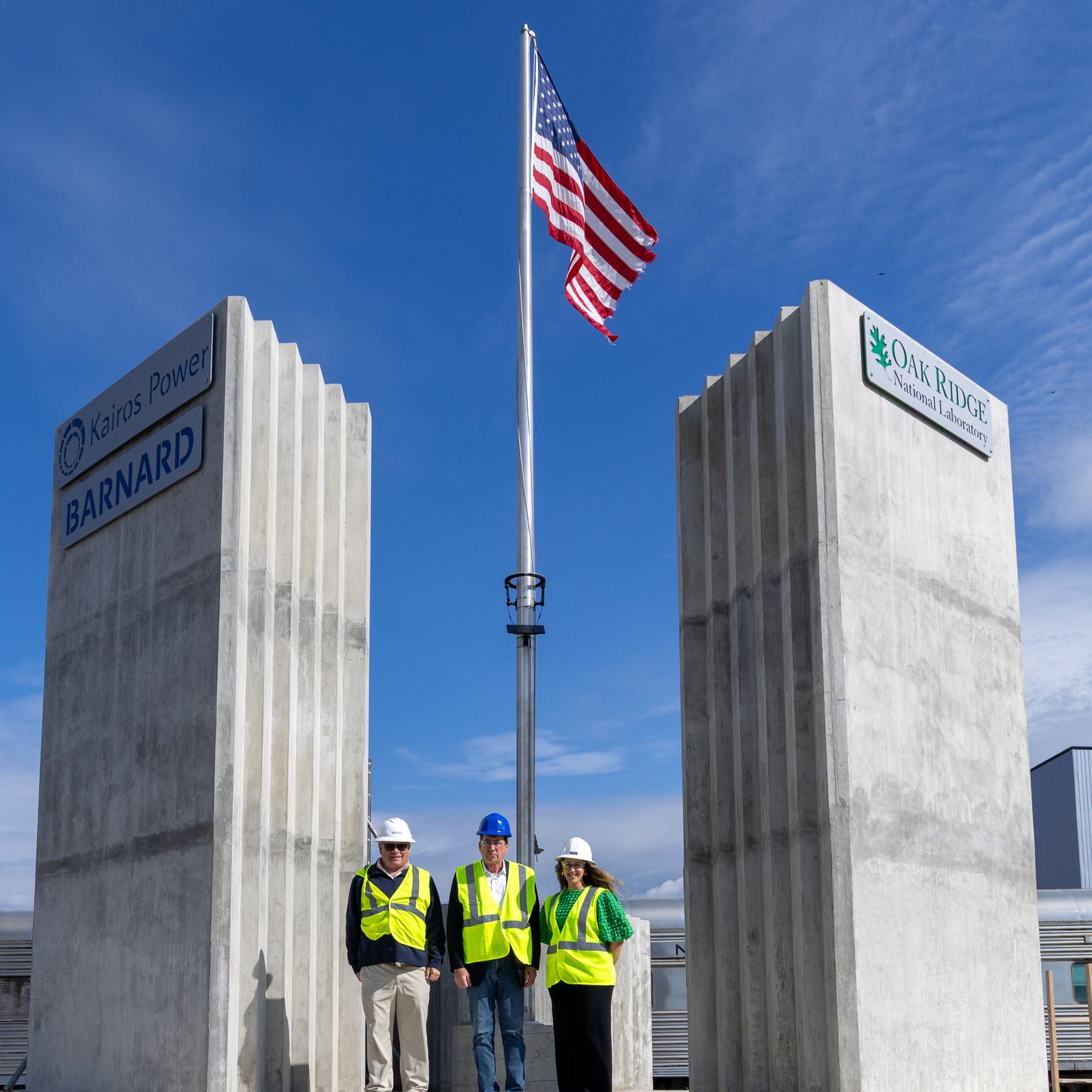
The project seeks to address a persistent challenge: nuclear plant construction is notoriously slow and expensive. Concrete structures alone, including radiation shielding, can represent as much as 60 percent of a project’s schedule risk. Small modular reactors (SMRs) are increasingly central to the country’s energy strategy, yet delays in building them undermine their promise.
该项目旨在解决一个长期存在的挑战:核电站建设素以进度缓慢和成本高昂著称。仅混凝土结构(包括辐射屏蔽)就可能占项目工期风险的60%。小型模块化反应堆正日益成为美国能源战略的核心,但建设延误削弱了其发展前景。
“Construction has been a major bottleneck for advanced reactors,” said Ahmed Hassen, group leader for composites innovation and the ORNL project lead. “We showed that digital manufacturing can cut weeks off the schedule while meeting strict nuclear standards.”
“建设一直是先进反应堆的主要瓶颈,”ORNL项目负责人兼复合材料创新团队负责人Ahmed Hassen表示,”我们证明数字制造可以在满足严格核标准的同时,将工期缩短数周。”
ORNL’s Manufacturing Demonstration Facility, alongside the University of Maine, Kairos Power, and other U.S. partners, applied large-format additive manufacturing (LFAM) to produce composite molds for casting the concrete elements of Kairos Power’s modular reactor shielding system. Because the Kairos reactor operates at low pressure, its concrete structures don’t require pressure-rated containment, which opened the door for this novel forming approach.
ORNL的制造示范设施与缅因大学、Kairos Power及其他美国合作伙伴合作,采用大幅面增材制造技术生产复合材料模具,用于浇筑Kairos Power模块化反应堆屏蔽系统的混凝土构件。由于Kairos反应堆在低压下运行,其混凝土结构无需耐压安全壳,这为这种新颖的成型方法创造了条件。
The molds were used to cast bio-shield strongback columns, roughly 8 by 8 by 20 feet, and shielding wall panels stretching up to 27 feet, some with complex interlocking joints that reduced or eliminated the need for grout. Engineers developed the molds using digital models, printed them in sections, then machined and sealed them to tolerances as tight as one-sixteenth of an inch. The forms also held up under wet concrete poured at heights of up to 12 feet.
这些模具用于浇筑约8x8x20英尺的生物屏蔽立柱,以及长达27英尺的屏蔽墙板,其中部分构件采用互锁接头设计,减少或消除了灌浆需求。工程师利用数字模型开发模具,分块打印后加工密封,精度可达1/16英寸。这些模具在高达12英尺的湿混凝土浇筑过程中保持稳定。
Where traditional steel molds require six to eight weeks to fabricate and are difficult to modify, the ORNL team designed, printed, and delivered reusable composite molds in roughly two weeks. The molds were lighter than steel, easier for field crews to handle, and completed four full casting cycles for the columns and three for the wall panels, with no measurable quality loss.
传统钢制模具需要六到八周制造且难以修改,而ORNL团队仅用约两周就完成可重复使用复合材料模具的设计、打印和交付。这些模具比钢材更轻便,便于现场施工人员操作,并完成了立柱4次完整浇筑循环和墙板3次浇筑循环,品质无显著下降。
This breakthrough demonstrates how additive manufacturing can transform heavy industries. For creators and engineers looking to explore similar innovations, our collection of premium STL files offers a wide range of designs suitable for prototyping and production applications.
这项突破展示了增材制造如何变革重工业。对于希望探索类似创新的创作者和工程师,我们的优质STL文件合集提供了适用于原型设计和生产应用的广泛设计资源。
The molds were validated through full-scale tests as part of Kairos Power’s reactor demonstration program, and the results are already attracting commercial interest. ORNL is now in discussions with a major U.S. precast manufacturer about scaling the methodology broadly. If adopted at scale, LFAM tooling could meaningfully compress construction timelines and reduce costs, bringing advanced reactors online sooner.
作为Kairos Power反应堆示范项目的一部分,这些模具已通过全尺寸测试验证,其成果已吸引商业关注。ORNL目前正与美国一家大型预制构件制造商讨论大规模推广该技术。若实现规模化应用,LFAM模具可大幅压缩建设工期并降低成本,使先进反应堆更快投入运行。
“This project shows that additive manufacturing is not just for prototypes,” Hassen said. “It can be a reliable, repeatable system for building safety-critical nuclear infrastructure to strengthen the country’s energy security.” The project was funded by DOE’s Advanced Materials and Manufacturing Technologies Office (AMMTO) under the SM2ART Program.
“该项目表明增材制造不仅适用于原型制作,”Hassen表示,”它可以成为建造安全关键型核基础设施的可靠、可重复系统,以加强国家能源安全。”该项目由美国能源部先进材料与制造技术办公室通过SM2ART计划资助。
The Kairos Power collaboration is part of a broader, years-long effort to modernize the U.S. nuclear industry. Most domestic nuclear power today comes from reactor designs that are decades old, and building new capacity has been hampered by high costs and long timelines. By integrating additive manufacturing into the construction process, ORNL and its partners are showing that 3D printing can help solve one of the most difficult infrastructure challenges of our time.
Whether you are working on industrial projects or personal creations, the right digital assets can make all the difference. Explore our library of 3D printing models to find designs that match your next build.
Looking for high-quality STL files? Browse our collection at 3dmis.com!
Original source: View Original
🚀 开启你的下一个 3D 打印项目
想要高质量的 STL 文件?浏览我们丰富的优质 3D 模型库,从流行文化角色到桌游 mini,应有尽有——尽在 3dmis.com!
🚀 Start Your Next 3D Printing Project
Looking for high-quality STL files? Browse our vast collection of premium 3D models at 3dmis.com!
📌 编者按:本文改编自行业最新资讯。查看原文
