

📌 The Convergence of Vision and Experience: AMS and AMUG
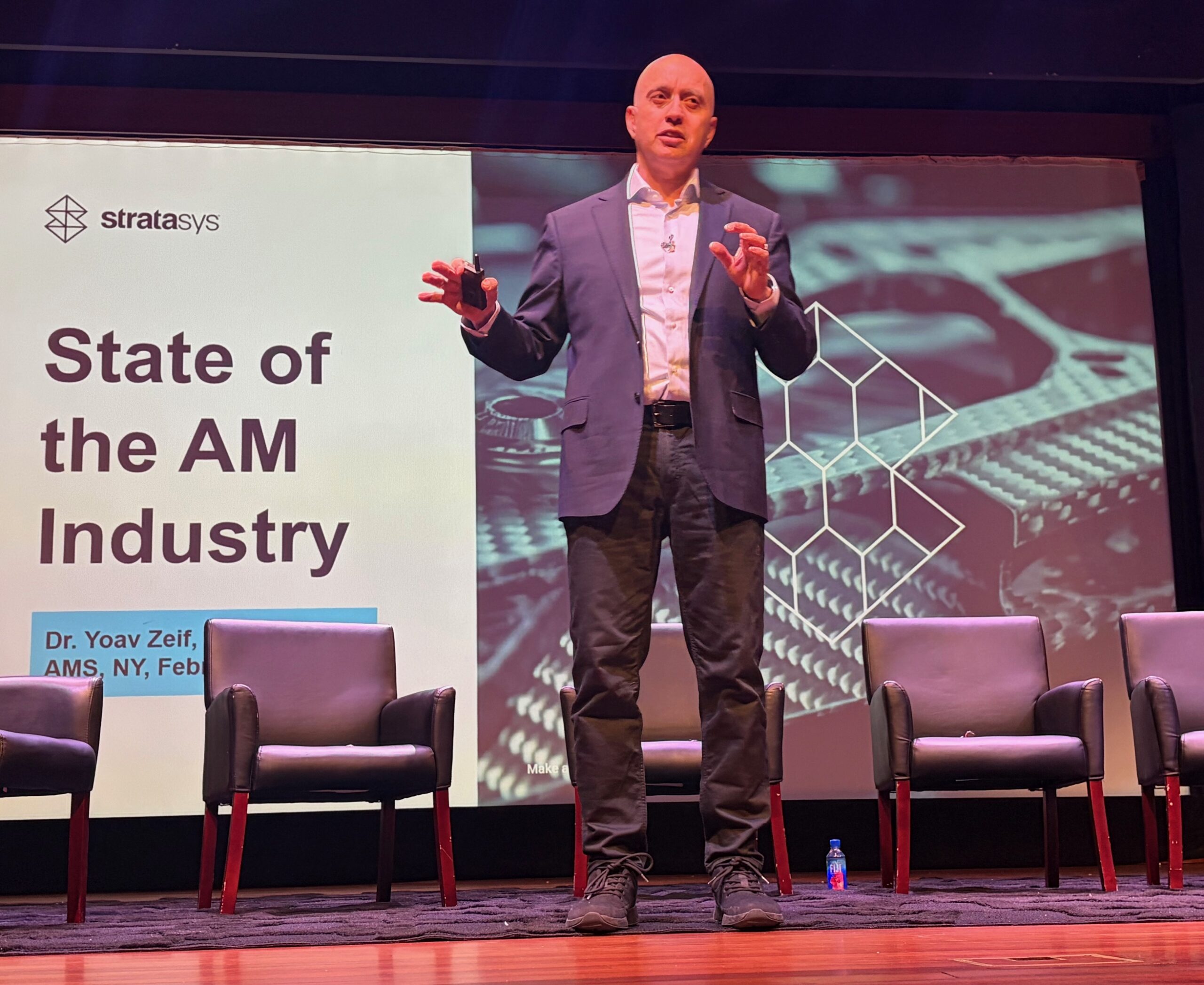
Over the last few weeks, I had the opportunity to be on the ground at two pivotal industry gatherings: the Additive Manufacturing Strategies Forum (AMS) and the Additive Manufacturing Users Group (AMUG) meeting. What stood out was not merely their differences, but how they represent two essential, complementary halves of the same industry. This contrast is fundamental, revealing where additive manufacturing is finding alignment and where it continues to navigate critical friction points.
过去几周,我有幸亲临两个关键行业盛会:增材制造战略论坛(AMS)和增材制造用户组(AMUG)会议。引人注目的不仅是它们的差异,更在于它们如何代表了同一产业中两个不可或缺、相辅相成的侧面。这种对比至关重要,揭示了增材制造领域正在达成共识的方向以及仍需应对的关键摩擦点。
In New York, the energy at AMS is deliberate and tightly focused. Conversations orbit around markets, capital efficiency, and pathways to profitability. This year, a new level of discipline was palpable. Panels moved swiftly past generic technology praise to grapple with hard metrics like system utilization rates. The central question was no longer just about a printer’s standalone capabilities, but whether it could sustain repeatable, economically viable production volumes.
在纽约,AMS的氛围是审慎而高度聚焦的。对话围绕市场、资本效率和盈利路径展开。今年,一种新的纪律性清晰可感。讨论小组迅速跳过了泛泛的技术赞美,转而探讨诸如设备利用率等硬性指标。核心问题不再仅仅是打印机的独立性能,而是它能否维持可重复、经济可行的生产规模。
There’s a clear shift in appetite. Grand claims of disruption have given way to sharp scrutiny on how additive integrates into existing manufacturing ecosystems. In a session on aerospace and defense, for example, qualification timelines were openly discussed not as mere adoption barriers, but as system-level constraints that must be factored into any realistic growth model. The audience—executives, investors, strategic operators—is calibrating expectations with sharper questions:
- Where does this technology win today?
- What defines a repeatable, profitable application?
- How does it scale without eroding margins?
The tone isn’t skeptical; it’s measured. This maturity signals an industry moving from promise to proof.
市场的偏好发生了明显转变。颠覆性的宏大宣言已让位于对增材制造如何融入现有制造生态系统的尖锐审视。例如,在一场关于航空航天与国防的会议中,认证时间线被公开讨论,不再仅仅被视为采用障碍,而是必须纳入任何现实增长模型的系统级约束。听众——高管、投资者、战略运营者——正用更尖锐的问题校准预期:
- 这项技术如今在哪些领域胜出?
- 如何定义一个可重复、盈利的应用?
- 它如何在不侵蚀利润率的情况下实现规模化?
这种基调并非怀疑,而是审慎。这种成熟度标志着一个行业正从承诺走向实证。
Just weeks later at AMUG, those same industry themes resurfaced, but transformed through the lens of hands-on experience. Here, conversations are less structured but often more revealing, unfolding in hallways, around machines, and during informal technical deep-dives. This environment fosters a unique openness where engineers share detailed failures as valuable data points, not setbacks.
几周后在AMUG,同样的行业主题再次浮现,但通过实践经验这一透镜发生了转变。这里的对话结构更松散,却往往更具启发性,在走廊、机器旁和非正式的技术深度探讨中展开。这种环境培育了一种独特的开放性,工程师们将详细的失败案例作为宝贵的数据点分享,而非挫折。
The dialogue gets incredibly specific: material behavior under stress, unforeseen post-processing bottlenecks, and design choices that looked perfect in CAD but faltered in production. This is where the industry is stress-tested in real-time. In one polymer-focused session, users exchanged hard-won lessons. One user optimized build orientation to slash print time, only to find support removal became a new bottleneck, negating gains. Another shared a clever design tweak that eliminated supports altogether. These aren’t headline-grabbing breakthroughs, but they are the precise, incremental improvements that determine whether an application is truly viable at scale—the kind of practical knowledge that informs the best premium STL files and 3D printing models.
对话变得极其具体:材料在应力下的行为、未预见到的后处理瓶颈、在CAD中看似完美但在生产中却出现问题的设计选择。这正是行业进行实时压力测试的地方。在一场聚焦聚合物的会议中,用户们交换了来之不易的经验教训。一位用户通过优化构建方向大幅缩短了打印时间,却发现支撑去除成了新的瓶颈,抵消了收益。另一位则分享了一个巧妙的设计调整,完全消除了支撑结构。这些并非吸引头条的突破,但正是这些精确、渐进的改进,决定了一个应用在大规模生产中是否真正可行——这类实践知识也塑造了最优质的STL文件和3D打印模型。
Stepping back, the connection between these two worlds is what’s most compelling. AMS’s strategic, application-driven focus is increasingly being defined and validated by the ground-truth experiences shared at AMUG. A “real application” is no longer just a compelling business case; it’s a process that has been rigorously tested, debugged, and refined by users. The vision from the boardroom and the experience from the workshop are converging. This synergy is accelerating the path to mature, scalable additive manufacturing, ensuring that strategic investments are grounded in practical reality. For creators and businesses, this means the ecosystem for successful projects—from sourcing reliable 3D printing models to implementing them in production—is becoming more robust and informed.
Looking for high-quality STL files? Browse our collection at 3dmis.com!
Original source: View Original
🚀 开启你的下一个 3D 打印项目
想要高质量的 STL 文件?浏览我们丰富的优质 3D 模型库,从流行文化角色到桌游 mini,应有尽有——尽在 3dmis.com!
🚀 Start Your Next 3D Printing Project
Looking for high-quality STL files? Browse our vast collection of premium 3D models at 3dmis.com!
📌 编者按:本文改编自行业最新资讯。查看原文
