

📌 Ultra-Thin Optical Film Pushes Budget Resin Printers Toward Professional Precision
Researchers from the National Taiwan University of Science and Technology have created an ultra-thin optical film capable of enhancing light quality in LCD resin-based 3D printers, a development that may bring professional-grade precision within reach of budget systems used in medical, industrial, and consumer applications. Resin-based 3D printing, also known as vat photopolymerization, works by projecting short-wavelength light onto liquid photosensitive resin to cure it layer by layer. While this method produces smooth, highly detailed parts, many affordable systems rely on LCD backlights that compromise accuracy.
来自台湾科技大学的科研团队研发出一种超薄光学薄膜,能够提升液晶树脂基3D打印机的光质量,这一进展有望让医疗、工业和消费领域使用的经济型系统达到专业级精度。树脂基3D打印(又称桶光聚合)通过将短波长光投射到液态光敏树脂上,逐层固化成型。虽然这种方法能制造出光滑且细节丰富的部件,但许多经济型系统依赖的液晶背光会损害精度。
“LCD-based liquid 3D printing suffers from surface roughness or dimensional inaccuracies due to improper light angular distribution from the backlight systems used,” said research team leader Ding-Zheng Lin from National Taiwan University of Science and Technology. “Our goal was to fix these problems without increasing equipment size, thereby elevating print performance to professional grade.”
“基于液晶的液态3D打印因背光系统的光角分布不当,常出现表面粗糙或尺寸误差问题,”研究团队负责人、台湾科技大学的林鼎正表示,”我们的目标是在不增加设备尺寸的前提下解决这些问题,从而将打印性能提升至专业水准。”
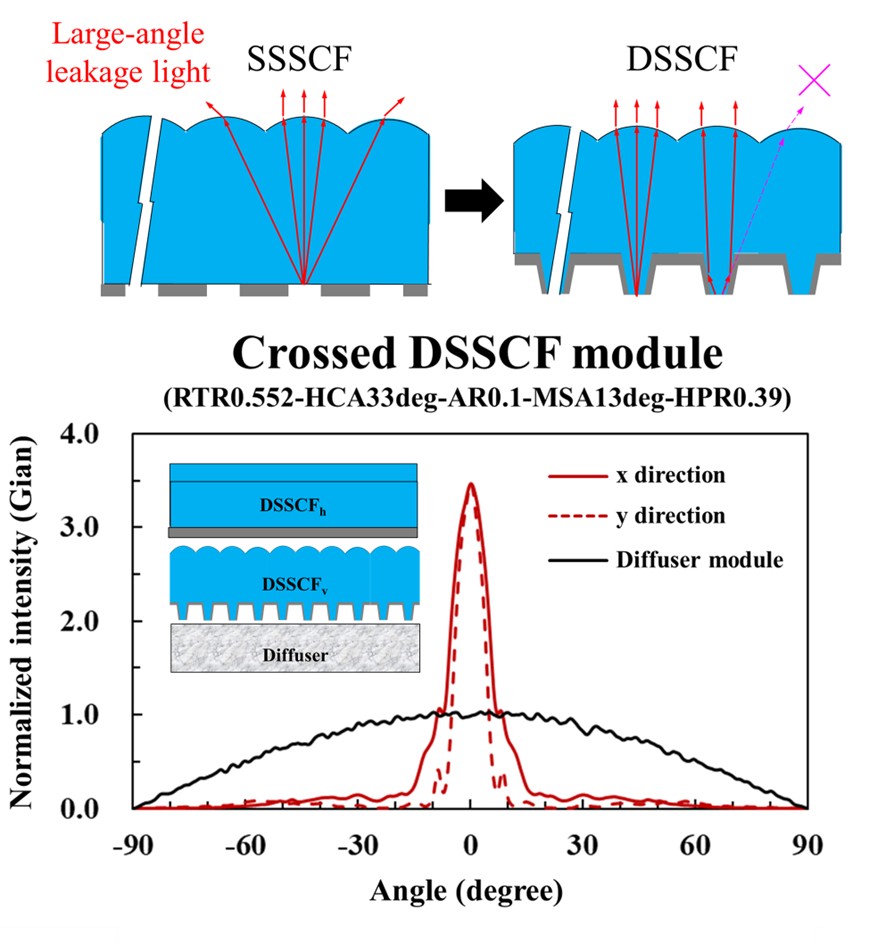
Published in the journal Optical Materials Express, the study introduces a double-sided structure collimation film designed to be integrated into LCD backlight modules. Using optical simulation software, they calculated the optimal geometric parameters for microscopic arrays of lenticular lenses and trapezoidal microstructures, which manipulate light on both sides of the film simultaneously, achieving meaningful optical correction within an extremely compact space. As light from the backlight travels through the film, scattered rays are refracted and realigned, ultimately projecting evenly across the entire printing area. Any light falling outside the escape angle is redirected back into the highly reflective module rather than wasted.
该研究发表于《光学材料快报》期刊,介绍了一种专为集成到液晶背光模组而设计的双面结构准直薄膜。通过光学仿真软件,他们计算了微阵列透镜和梯形微结构的最佳几何参数,这些结构能同时控制薄膜两侧的光线,在极紧凑的空间内实现有效的光学校正。当背光穿过薄膜时,散射光线被折射并重新定向,最终均匀投射到整个打印区域。任何超出逃逸角度的光线都会被重新导向高反射模组,而非浪费掉。
“Compared to existing technologies, such as bulky lens assemblies or older single-sided structure films, our double-sided films are thinner while also being more precise and cost-effective,” said Lin. “This allows minute details to be reproduced accurately while saving space inside 3D printers, and it is well-suited for mass production and integration into consumer-grade devices.”
“与现有技术(如笨重的透镜组件或老式单面结构薄膜)相比,我们的双面薄膜更薄,同时精度更高且成本更低,”林鼎正说,”这能精确复现微小细节,同时节省3D打印机内部空间,非常适合大规模生产并集成到消费级设备中。”
To evaluate the film’s performance, the team built a custom measurement system around an angle-dependent photometer, a specialized tool that captures both beam divergence angle and light intensity distribution. Results confirmed a substantial improvement in collimation alongside a highly uniform light distribution, validating the design’s effectiveness. The researchers then assembled a full prototype backlight module by combining two double-sided films with a diffuser. The module achieved intensity uniformity above 81% and a first peak FWHM below 10°, meaning the light output was relatively directional rather than widely scattered, exactly the conditions needed for sharp, accurate resin curing.
为评估薄膜性能,团队围绕角度依赖光度计搭建了一套定制测量系统——这是一种能同时捕捉光束发散角和光强分布的专业工具。结果证实,准直性显著提升,同时光分布高度均匀,验证了设计的有效性。随后,研究人员将两片双面薄膜与一个扩散器组合,组装出完整的背光模组原型。该模组实现了超过81%的强度均匀性,且第一峰值半高宽低于10°,意味着光输出相对定向而非广泛散射——这正是实现锐利、精确树脂固化所需的理想条件。
Next steps include reducing energy loss to improve overall light utilization efficiency, as well as testing the film across multiple wavelengths to ensure broad compatibility with different 3D printing resins currently on the market.
下一步计划包括减少能量损失以提高整体光利用效率,并在多个波长下测试薄膜,以确保其与市面上不同3D打印树脂的广泛兼容性。
The research from National Taiwan University of Science and Technology targets a persistent tension in the resin 3D printing market: the gap between affordable LCD-based systems and high-end professional machines. By improving light collimation without increasing printer size or cost, this ultra-thin optical film could democratize access to precision printing. For enthusiasts and professionals alike, this means that budget-friendly printers may soon produce parts with the accuracy and surface finish previously reserved for expensive industrial setups.
台湾科技大学的这项研究瞄准了树脂3D打印市场中长期存在的矛盾:经济型液晶系统与高端专业设备之间的差距。通过在不增加打印机尺寸或成本的前提下改善光准直性,这种超薄光学薄膜有望让精密打印变得普及。对爱好者和专业人士而言,这意味着经济型打印机很快就能制造出精度和表面光洁度以往仅见于昂贵工业设备的部件。
As the technology matures, we can expect to see it integrated into consumer-grade printers, enabling applications in dentistry, jewelry design, prototyping, and more. For those looking to take advantage of the latest advancements in 3D printing, exploring high-quality premium STL files and 3D printing models is a great way to start creating professional-grade parts at home.
随着这项技术的成熟,我们有望看到其在
Looking for high-quality STL files? Browse our collection at 3dmis.com!
Original source: View Original
🚀 开启你的下一个 3D 打印项目
想要高质量的 STL 文件?浏览我们丰富的优质 3D 模型库,从流行文化角色到桌游 mini,应有尽有——尽在 3dmis.com!
🚀 Start Your Next 3D Printing Project
Looking for high-quality STL files? Browse our vast collection of premium 3D models at 3dmis.com!
📌 编者按:本文改编自行业最新资讯。查看原文
