

📌 Vivobarefoot Launches Tabi Gen 02, Custom 3D Printed Sandal
UK-based footwear brand Vivobarefoot has unveiled the Tabi Gen 02, the second iteration of its scan-to-print barefoot sandal. Developed in partnership with Carbon and manufactured by Oechsler, this new model is lighter and more precise than its predecessor. The sandal is custom-printed for each wearer using Carbon’s Digital Light Synthesis process and CARBON BL6 PU foam. Available in moonrock grey at £110, it can currently be ordered through three Vivobarefoot scan locations in London, Bristol, and Prague.
英国鞋履品牌 Vivobarefoot 推出了 Tabi Gen 02,这是其扫描到打印赤足凉鞋的第二代产品。这款新凉鞋与 Carbon 合作开发,由 Oechsler 制造,比上一代更轻、更精准。它采用 Carbon 的数字光合成工艺和 CARBON BL6 PU 泡沫,为每位穿着者定制打印。可选月石灰配色,售价 110 英镑,目前可通过 Vivobarefoot 在伦敦、布里斯托尔和布拉格的三家扫描点订购。
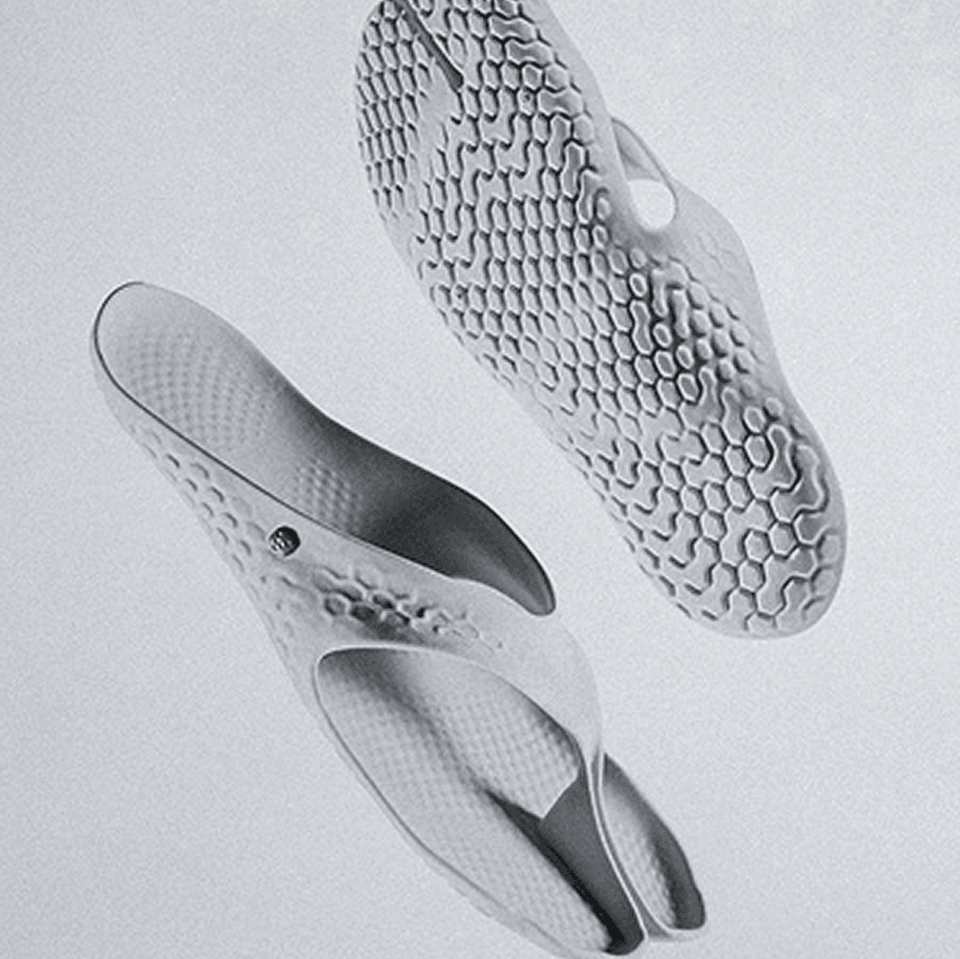
The Tabi Gen 02 builds directly on the lessons of Gen 01, which Vivobarefoot launched last year through its VivoBiome platform. That first release was deliberately small—just 590 pairs—produced using SLS technology after customers visited in-store stations to have their feet scanned. The split-toe sandal, priced at £140, was less a commercial launch than a proof of concept: evidence that a scan-to-print, zero-stock production model could work at the retail level.
Tabi Gen 02 直接继承了 Gen 01 的经验教训,后者是 Vivobarefoot 去年通过其 VivoBiome 平台推出的。首次发布规模刻意较小——仅 590 双——采用 SLS 技术生产,顾客需到店内扫描站扫描脚部。这款分趾凉鞋售价 140 英镑,与其说是商业发布,不如说是概念验证:证明扫描到打印、零库存的生产模式可以在零售层面运作。
Gen 02 takes that foundation and refines it. The shift from SLS to Carbon’s DLS process brings improved material precision, a lighter overall construction (each sandal weighs approximately 91 grams), and an ultra-thin 2mm sole engineered for maximum ground feedback. The split-toe design and ergonomic flex zones are retained, now with tighter tolerances from the Volumental foot scan that generates each wearer’s custom blueprint.
Gen 02 在此基础上进行了改进。从 SLS 转向 Carbon 的 DLS 工艺带来了更高的材料精度、更轻的整体结构(每只凉鞋约重 91 克),以及专为最大地面反馈设计的超薄 2 毫米鞋底。分趾设计和符合人体工学的弯曲区域得以保留,现在通过 Volumental 足部扫描生成的每位穿着者定制蓝图,公差更小。
Vivobarefoot’s core position has always been that conventional footwear does more harm than good. The company points to data suggesting 77% of people develop some form of foot problem—a consequence, it argues, of rigid, cushioned shoes that restrict natural movement and weaken the intrinsic muscles of the foot. The Tabi line is the purest expression of its counter-thesis: a shoe shaped entirely to the individual foot, with no standard sizing, no excess material, and no compromise on fit.
Vivobarefoot 的核心立场始终是:传统鞋履弊大于利。该公司援引数据指出,77% 的人会患上某种足部问题——他们认为,这是由限制自然运动、削弱足部内在肌肉的僵硬缓冲鞋造成的。Tabi 系列是其反命题的最纯粹表达:完全根据个人脚型塑造的鞋子,没有标准尺码,没有多余材料,在贴合度上毫不妥协。
By integrating Carbon’s distributed print network, Vivobarefoot is also advancing a made-to-order, low-waste production model that eliminates inventory entirely, printing only what is needed, when it is needed, as close to the customer as the network allows. Vivobarefoot frames this openly as a journey rather than a finished product—one that improves with each release and each pair of feet that moves through the system.
通过整合 Carbon 的分布式打印网络,Vivobarefoot 还推进了一种按需生产、低浪费的模式,完全消除库存,只打印所需、适时打印,并尽可能在客户附近通过网络完成。Vivobarefoot 公开将此视为一段旅程,而非成品——每一次发布、每一双经过系统的脚都会让它变得更好。
The Tabi Gen 02 is part of a growing movement in 3D printed footwear where the goal is no longer just a better-looking shoe, but one built around the individual foot. Indianapolis-based Fitasy developed a scan-to-print system that uses a smartphone to capture precise foot geometry, generating a custom fit profile that drives the print, with consumer orders expected to begin in Spring 2026 and a triple-layer lattice structure designed to conform to each foot’s contours and distribute impact forces.
Tabi Gen 02 是不断发展的 3D 打印鞋履运动的一部分,其目标不再仅仅是打造更美观的鞋子,而是围绕个人脚型构建。总部位于印第安纳波利斯的 Fitasy 开发了一种扫描到打印系统,使用智能手机捕捉精确的足部几何形状,生成定制贴合档案以驱动打印,消费者订单预计于 2026 年春季开始,其三层晶格结构旨在贴合每只脚的轮廓并分散冲击力。
In performance footwear, German startup HEZO takes the same principle into cycling, using a smartphone app to capture around 1,000 data points per foot and producing each pair individually in Germany after the order is placed, with no inventory, targeting riders with asymmetrical feet or pressure-related discomfort that standard sizing cannot address. Elsewhere, Lubrizol and Lore Cycle use 3D scans to fabricate custom cycling shoes with a 3D printed TPU upper shaped to each customer’s unique foot, with models starting at $1,349, positioning precision fit as a premium offering.
在性能鞋履领域,德国初创公司 HEZO 将相同原理应用于骑行,使用智能手机应用每只脚捕捉约 1000 个数据点,下单后在德国单独生产每双鞋,无库存,针对标准尺码无法解决的足部不对称或压力相关不适的骑行者。此外,Lubrizol 和 Lore Cycle 利用 3D 扫描制造定制骑行鞋,采用 3D 打印 TPU 鞋面,根据每位顾客的独特脚型塑造,起售价为 1349 美元,将精准贴合定位为高端产品。
Taken together, these efforts point to the same conclusion Vivobarefoot has built its platform around: standard sizing is a compromise. For designers and makers exploring custom-fit footwear, the technology is now mature enough to consider integrating scan-to-print workflows into your own projects. Whether you’re prototyping new sole geometries or developing bespoke insoles, the same principles apply—and the best place to start is with high-quality source files. If you’re looking for inspiration or ready-to-print designs, check out our collection of premium STL files that can be adapted for custom-fit applications.
综合来看,这些努力指向了 Vivobarefoot 平台所基于的相同结论:标准尺码是一种妥协。对于探索定制贴合鞋履的设计师和制造商来说,技术现已足够成熟,可以考虑将扫描到打印工作流程整合到自己的项目中。无论你是在原型设计新鞋底几何结构,还是开发定制鞋垫,同样的原则都适用。
Looking for high-quality STL files? Browse our collection of 3D printing models at 3dmis.com!
Original source: View Original
🚀 开启你的下一个 3D 打印项目
想要高质量的 STL 文件?浏览我们丰富的优质 3D 模型库,从流行文化角色到桌游 mini,应有尽有——尽在 3dmis.com!
🚀 Start Your Next 3D Printing Project
Looking for high-quality STL files? Browse our vast collection of premium 3D models at 3dmis.com!
📌 编者按:本文改编自行业最新资讯。查看原文
